
Folklore & Origins
Halloween Traditions Around the World: 10 Customs Compared
Where it comes from: Most Halloween traditions around the world are not Halloween at all. Ireland and the Isle of Man keep Samhain customs on October 31, while Mexico, Poland and the Philippines honour the dead on November 1 and 2, Germany walks with lanterns on November 11, and Japan remembers ancestors at Obon in summer.
Start with a claim that surprises most people: Germany had almost no Halloween trade before the 1990s. The toy industry consultant Dieter Tschorn told The Local in 2016 that Halloween turnover was zero in 1994, the year he sent his first press release about it. Many of the “Halloween traditions around the world” that fill autumn listicles are either much younger than that or much older, and quite a few belong to entirely different holidays.
So we sorted them by three questions: what is the custom called, which day is it, and is it the same holiday or a different one sharing the calendar? Every date below names its source. Which of these did you already know?
- 9th century: Samhain appears in the earliest Irish literature, according to the Wikipedia entry on Samhain.
- 1605: the Gunpowder Plot fails, and afterwards Guy Fawkes Night on November 5 eclipses Allhallowtide in England, according to the Wikipedia history of Halloween.
- 1755: survivors of the Lisbon earthquake ask neighbouring towns for bread, a story Wikipedia ties to the Portuguese Pão-por-Deus custom, itself recorded since the 15th century.
- 1983: the Harajuku toy shop Kiddy Land stages Japan’s first Halloween parade along Omotesando, according to Unseen Japan.
- 1997: Tokyo Disney holds its first Halloween event and Kawasaki starts its parade, according to Unseen Japan.
- 1997 to 1998: Halloween arrives “massively” in French shops, in the words of historian Thomas Snégaroff on franceinfo.
- 2008: UNESCO inscribes Mexico’s “Indigenous festivity dedicated to the dead” on its Representative List of the Intangible Cultural Heritage of Humanity.
- 2014: spending on Halloween in Japan passes Valentine’s Day for the first time, per Nippon.com, citing the Japan Anniversary Association.
- 2016: Mexico City holds its first official Day of the Dead parade, with 250,000 attendees, according to the Wikipedia entry on the Day of the Dead.
- 2019: the Irish tourism board Fáilte Ireland launches the Púca Festival around the Samhain site at the Hill of Ward, per the Wikipedia entry on Athboy.
Which Halloween traditions around the world are really Halloween?
Only a few. Ireland, Scotland and the Isle of Man keep customs that descend from Samhain on October 31. Most other famous examples, from Mexico’s Day of the Dead to Japan’s Obon, are separate holidays with their own dates and meanings that simply share the theme of remembering the dead.
The table compares ten places. The fifth column is the one most lists skip: same holiday, related, or different.
| Country | Custom or holiday | Date | What people do | Same holiday or different? | Source |
|---|---|---|---|---|---|
| Ireland | Samhain, Halloween; Púca Festival since 2019 | October 31 to November 1 | Bonfires, barmbrack, a Samhain fire at the Hill of Ward | Same root: the Gaelic festival | Wikipedia (Samhain, Barmbrack, Athboy) |
| Isle of Man | Hop-tu-Naa | October 31 | Children carry carved turnips called moots and sing door to door | Same root, its own name | Wikipedia (Hop-tu-Naa) |
| England | Guy Fawkes Night | November 5 | Bonfires, fireworks, burning effigies | Different holiday (1605 plot) | Wikipedia (Guy Fawkes Night) |
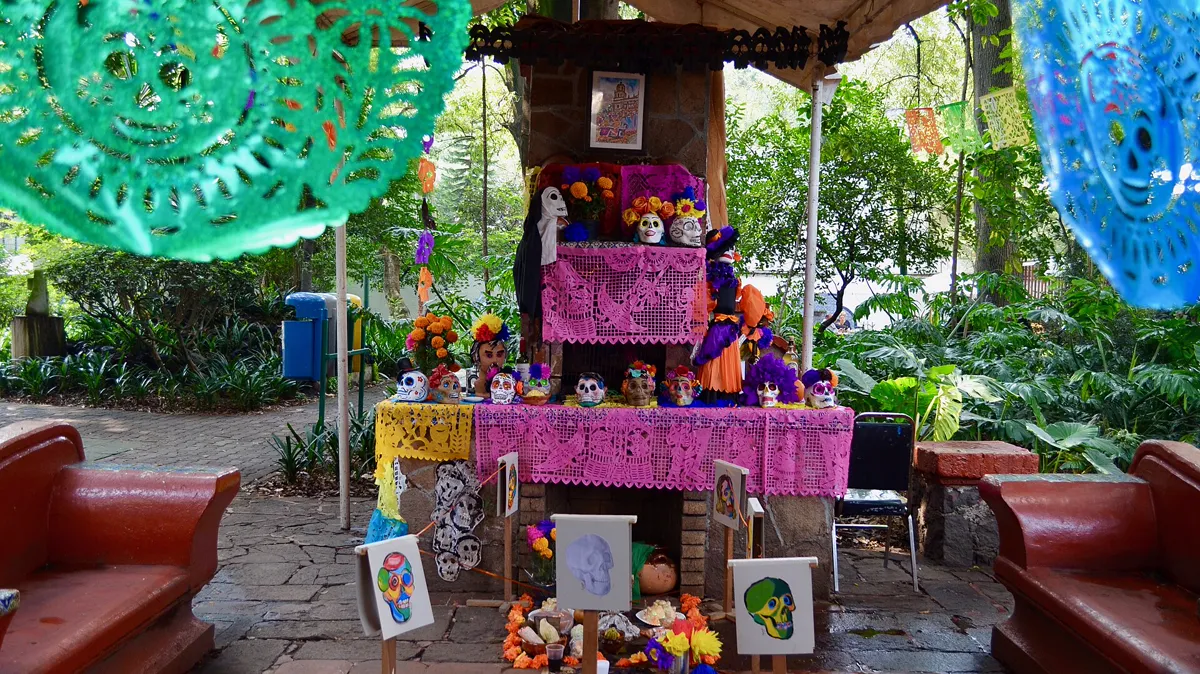
| Mexico | Día de los Muertos | November 1 and 2 | Home altars (ofrendas), marigolds, food for the dead, grave visits | Different holiday, UNESCO listed | UNESCO; Wikipedia (Day of the Dead) |
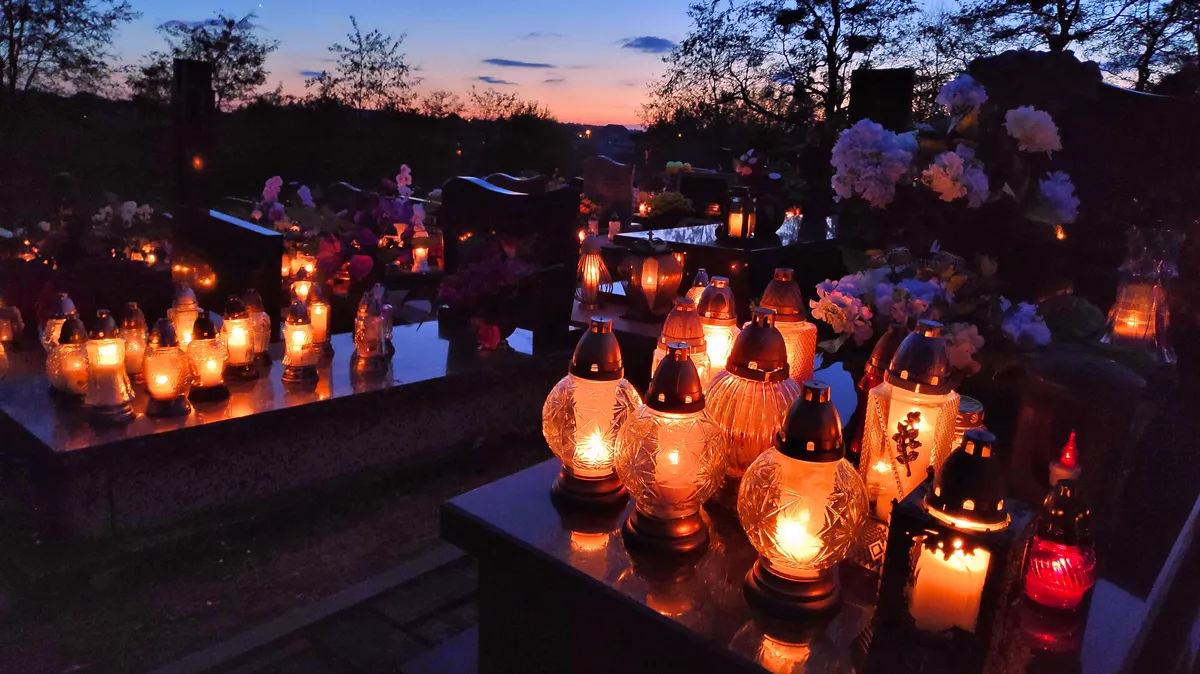
| Poland | Wszystkich Świętych and Zaduszki | November 1 and 2 | Candles called znicze and chrysanthemums on family graves | Different holiday (All Saints, All Souls) | Wikipedia (Public holidays in Poland) |
| Philippines | Undas | November 1 and 2 | Cleaning tombs, cemetery reunions and overnight vigils | Different holiday (All Saints, All Souls) | Wikipedia (Day of the Dead); Proclamation No. 1006 |
| Portugal | Pão-por-Deus | November 1 | Children ask neighbours for bread, cakes, nuts or fruit | Related: a doorstep custom on All Saints’ Day | Wikipedia (Pão-por-Deus) |
| Germany and Austria | St Martin’s Day, Laternelaufen | November 11 | Lantern processions, songs for sweets, a rider playing St Martin | Different holiday (a saint’s feast) | Wikipedia (St. Martin’s Day, Laternelaufen) |
| Japan | Obon | July 15 or August 15, about 4 days | Welcoming fires, Bon Odori dances, floating lanterns | Different holiday, a summer festival of the dead | Wikipedia (Obon) |
| China and parts of Southeast Asia | Ghost Festival | 15th night of the 7th lunar month | Food offerings, joss paper, empty seats for the dead, lanterns on water | Different holiday, part of Ghost Month | Wikipedia (Ghost Festival) |
Notice how many rows say “different”? The shared theme is real: autumn, darkness and the dead. The shared history mostly is not. For the stories behind other holidays, browse our folklore and origins section.
Is Día de los Muertos the Mexican Halloween?
No. Día de los Muertos is a separate holiday, traditionally kept on November 1 and 2, when families welcome the souls of their dead relatives home with altars, food and flowers. UNESCO inscribed it in 2008 as an “Indigenous festivity dedicated to the dead”, describing a blend of pre-Hispanic rites and Catholic feast days.
UNESCO says families lay flower petals, candles and offerings along the path from the cemetery to the home, and that the timing marks the end of the annual maize cycle. Wikipedia adds the details visitors recognise: cempasúchil marigolds believed to attract souls, pan de muerto with bone-shaped decorations, and sugar skulls inscribed with a name.
The famous skeleton lady, La Catrina, is younger than she looks. Wikipedia credits the image to the printmaker José Guadalupe Posada and its full-length form to Diego Rivera’s 1946 to 1947 mural. The big Mexico City parade is younger still: it began in 2016, after a 2015 feature film showed an invented parade in the city, and its first edition drew 250,000 people, per the same entry.
What does the holiday feel like from inside a family? In a 2012 radio story for NPR, reporter Anayansi Diaz-Cortes described shopping in mid-October at a sugar-skull market about 45 minutes from Mexico City. Her mother, born on November 2, had been taken to the graveyard every birthday and never made an altar, so Diaz-Cortes decided to make one herself for her grandmother. A custom passed down, skipped, then picked up again: is that not how most traditions actually survive?
How do Poland and the Philippines mark All Saints and All Souls?
Both countries go to the cemetery. In Poland families visit graves and light glass candles called znicze on November 1, a statutory public holiday. In the Philippines families gather at tombs for Undas, often staying overnight. Both follow the Catholic calendar of All Saints’ Day and All Souls’ Day.
In Poland, November 1 is a public holiday, while All Souls’ Day on November 2, called Zaduszki, is not, according to the Wikipedia list of Polish public holidays. The older Slavic rites for ancestral spirits, called Dziady, were kept around the same days in Belarus, Poland, Ukraine and Lithuania, per Wikipedia.
Irish journalist Liam Nolan gave a vivid account of the day in a 2023 report for RTÉ. In 2007 he drove with his mother-in-law from Katowice to the family’s home town of Wielun, where relatives shook hands in a crowded, windy graveyard and she lit candles at her parents’ graves. That night, he wrote, cemetery after cemetery glowed red in the dark.
In the Philippines, Undas means cleaning and repairing family tombs, then holding reunions with food at the cemetery, sometimes through the night, according to the Wikipedia entry on the Day of the Dead. As of October 2026, Proclamation No. 1006, signed on September 3, 2025, makes November 1, 2026 a special non-working day and November 2 an additional special non-working day. Does your family visit graves at a fixed time of year?
Where else do children go door to door?
In several places, under other names and on other dates. Children in Portugal ask for bread on November 1, Manx children sing Hop-tu-Naa songs on October 31, and children in Germany, Austria and the Netherlands carry lanterns and sing for sweets on St Martin’s Day, November 11.
The North American habit grew out of souling and guising in Britain and Ireland, as we traced in our history of how trick-or-treating began. The cousins below never took that route.
- Pão-por-Deus, Portugal: on All Saints’ Day children greet neighbours with the words “Pão-por-Deus” (“bread for God”) and receive bread, cakes, nuts, fruit or coins. Wikipedia dates records of the custom to the 15th century and notes that in the Azores children receive skull-shaped cakes.
- Hop-tu-Naa, Isle of Man: children carry carved turnips, called moots, and sing “around the houses” for sweets or money. Wikipedia describes it as a celebration of Samhain and as possibly the oldest unbroken tradition on the island.
- Laternelaufen, Germany and Austria: children aged about 5 to 12 walk the streets with lanterns, often made at school, singing songs such as “Laterne, Laterne”, per the Wikipedia entry on Laternelaufen. A rider dressed as St Martin often leads the walk.
- Sint-Maarten, the Netherlands: children ring doorbells with their lanterns and sing for sweets or fruit, according to the Wikipedia entry on St. Martin’s Day.
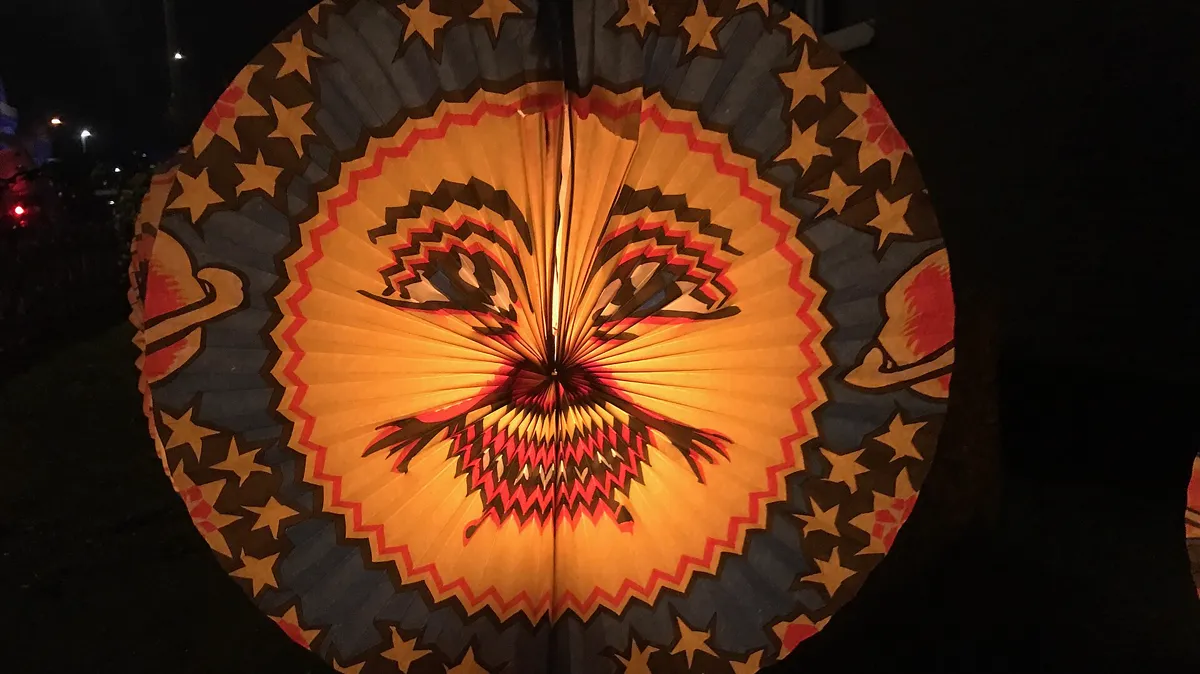
St Martin himself was Martin of Tours, a Roman soldier turned bishop who died in 397, best known for cutting his cloak in half for a freezing beggar, per Wikipedia. Why lanterns? Nobody is sure. Wikipedia lists theories from older bonfires to the wish for light as days shorten, and none is proven. It is a saint’s feast, not a festival of the dead, which makes it a different holiday from Halloween despite the lanterns, the songs and the treats.
Is there an Asian version of Halloween?
Not exactly. Asia has its own festivals of the dead, but they follow lunar or local calendars and fall mostly in summer. Japan’s Obon welcomes ancestors home in July or August, and the Ghost Festival on the 15th night of the seventh lunar month honours wandering spirits across China and parts of Southeast Asia.
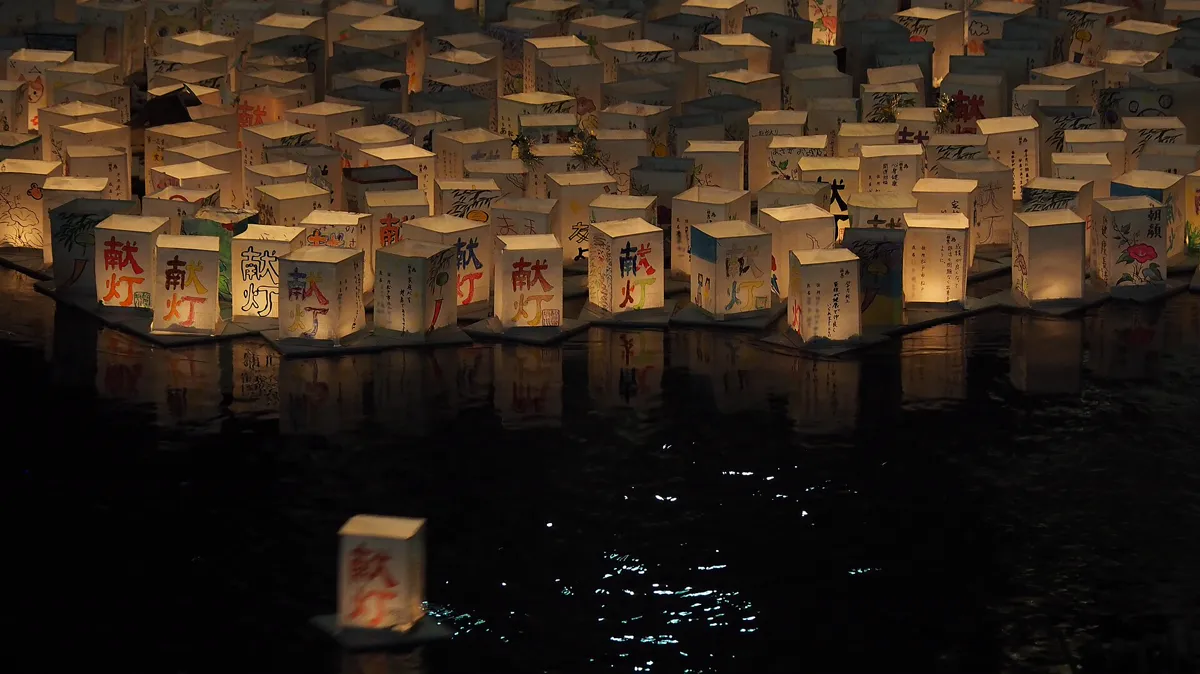
Obon lasts about four days. Families light a small fire on the first evening to guide souls home and send them off at the end with okuribi, sometimes floating lanterns down a river, according to the Wikipedia entry on Obon. The same entry traces the name to the Sanskrit ullambana, linked to the story of a disciple who saw his mother suffering among hungry ghosts.
The Ghost Festival shares that Buddhist root and adds a Taoist name, Zhongyuan, per Wikipedia. During Ghost Month, families burn joss paper, set out food, leave empty seats for the dead at performances and release paper boats and lanterns on water.
When did American-style Halloween reach other countries?
Mostly in the last forty years, and often through marketing. Japan’s first parade came in 1983, German retailers began promoting Halloween in 1994 after a lost Karneval season, and French shops embraced it in 1997 and 1998. Theme parks and toy makers did much of the spreading.
The money tells the story. In Japan, the Japan Anniversary Association projected Halloween spending of ¥122.0 billion for 2015, more than double the ¥56.0 billion of 2011, according to Nippon.com. Unseen Japan put it bluntly: only the parts that could sell, the costumes and the parties, made the trip.
Germany followed a similar path. Tschorn told The Local that German Halloween turnover went from zero in 1994 to about €30 million a year by 2016, and the federal portal deutschland.de reports that children there now ask for sweets with “Süß oder saueres!”. France cooled faster. On franceinfo in 2015, Snégaroff noted that candy sellers still earned less around November 1 than flower sellers, above all those selling chrysanthemums for graves on La Toussaint.
Ireland went the other way, using its Samhain heritage for tourism: Fáilte Ireland’s Púca Festival runs in Trim and Athboy, County Meath, from October 29 to November 1, 2026, as of October 2026, according to Discover Ireland. Which of these surprised you most?
Myth or fact? Six claims about Halloween around the world
Each label reflects what the reference sources say, not what makes the neatest story.
- “Día de los Muertos is Mexican Halloween.” Myth. UNESCO lists it as a separate Indigenous festivity, kept from late October to early November with its own rites.
- “Halloween is Ireland’s own invention.” Partly true. Samhain appears in Irish literature from the 9th century, but Wikipedia notes that the step from Samhain to All Hallows’ Day remains a theory, not a record.
- “German children always went trick-or-treating.” Myth. Organised promotion began with a press release on September 4, 1994, per The Local. The older German doorstep custom belongs to St Martin’s Day.
- “The Mexico City skeleton parade is centuries old.” Myth. The first official parade was held in 2016, according to Wikipedia.
- “Obon is Japan’s Halloween.” Different holiday. Obon falls in July or August and welcomes ancestors home, per Wikipedia; Japan’s October street parties date from 1983 and 1997.
- “Guy Fawkes Night replaced Halloween in England.” Partly true. Wikipedia says it eclipsed Allhallowtide after 1605 and absorbed some of its customs, but it marks a political plot, not the dead.
Spot a new claim? Ask two questions: which date, and which source. Our guide to where customs come from uses the same test on other holidays.
Tradition trivia
What is barmbrack?
Barmbrack is an Irish fruit bread tied to Halloween. Tokens such as a ring, a coin or a pea were baked inside as a fortune-telling game, and shop versions still hide a toy ring, according to Wikipedia.
Do people in France celebrate Halloween?
Some do, mostly children and young adults in cities. The bigger date is La Toussaint on November 1, when families visit graves with chrysanthemums, and franceinfo reported in 2015 that flower sellers still outsold candy sellers.
What is a moot on the Isle of Man?
A moot is a carved turnip lantern. Manx children carry moots on October 31 while singing Hop-tu-Naa songs from house to house for sweets or coins.
What do Germans eat on St Martin’s Eve?
Roast goose, called Martinsgans, is the traditional dish, usually served after the lantern procession on the evening of November 10 or on November 11.
What do German children say instead of “trick or treat”?
They say “Süß oder saueres!”, which means “sweet or sour”, according to deutschland.de. The phrase belongs to the American-style holiday, while St Martin’s lantern songs are much older.
Historical claims here come from reference sources, not folklore sites. The draft was prepared with AI, and each claim was re-checked against the reference source before publishing.
Sources: UNESCO, intangible heritage entry; Supreme Court of the Philippines E-Library, 2026 holidays proclamation; The Local, report on the German arrival; deutschland.de, German customs overview; franceinfo, history segment; Nippon.com, market figures; Unseen Japan, timeline article; Discover Ireland, festival listing; Wikipedia entries on the old quarter-day festival, the Mexican festivity, the island turnip custom, the Portuguese doorstep custom, lantern walks, the fortune-telling fruit bread, the English bonfire night, the Japanese summer festival, the Chinese festival for spirits and public holidays in Poland.