
Folklore & Origins
New Year’s Day Food Traditions: How Old Is Each One?
Where it comes from: Most new year’s day food traditions are younger than their legends. Spain’s 12 grapes show up in Madrid newspapers in the 1890s, black-eyed peas are tied to luck in print by 1937, and Japan’s year-end soba dates to the Edo period. Many share one idea: food shaped like coins or long life invites a good year.
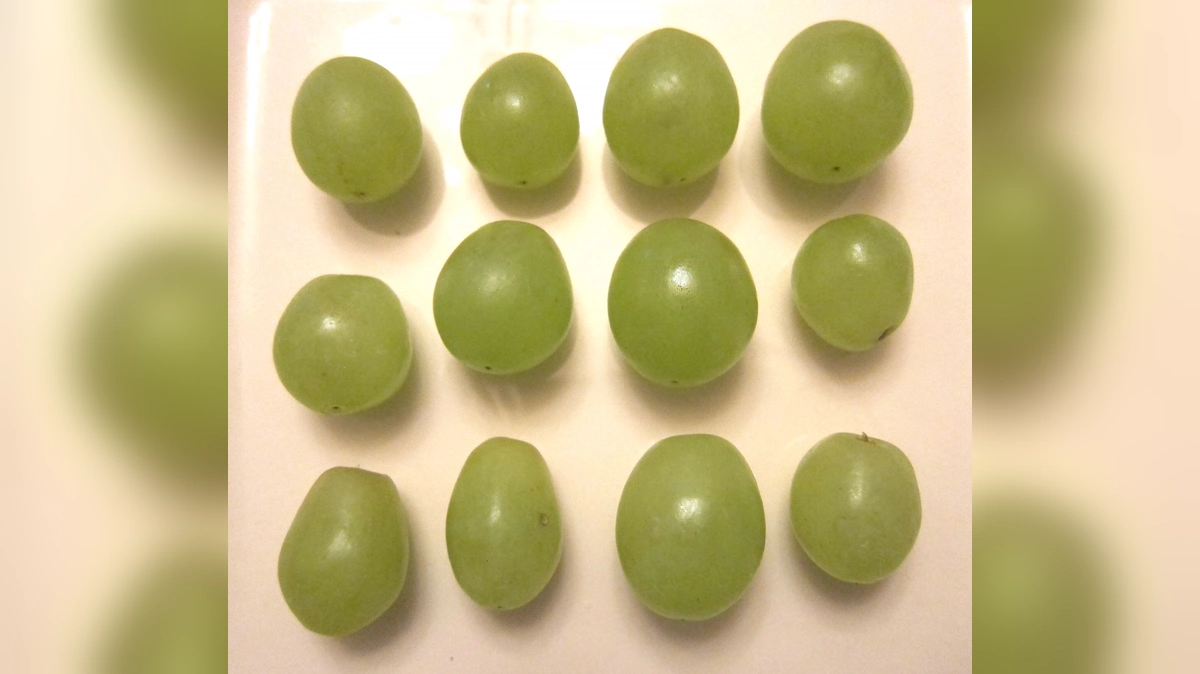
Here is a claim that surprises people: almost nobody can say when their lucky New Year food started. Families serve black-eyed peas, lentils or a coin cake every January “for luck” or “because grandma did”, and the dates are much shakier than the recipes. So how old is each custom, really?
We checked the best-known lucky foods for new year against encyclopedias, food history archives and museum sources. Here is the dated trail.
- Edo period, 1603 to 1867: buckwheat noodles on the last night of the year become a Japanese custom, per the Wikipedia entry on toshikoshi soba.
- 1667: the Dutch cookbook De verstandige kock prints “oliekoecken”, the ancestor of oliebollen, per the Wikipedia entry on oliebollen.
- 1838: “Hopping John” appears in print in Caroline Howard Gilman’s Recollections of a Southern Matron, per the Wikipedia entry on the dish.
- 1847: Sarah Rutledge prints a Hopping John recipe in The Carolina Housewife, according to the same entry.
- 2 January 1894: the Madrid paper El Imparcial calls midnight grapes a French import now naturalized in Spain, as quoted in the Spanish Wikipedia entry on the lucky grapes.
- December 1909: grape growers in Alicante push the custom across Spain after an unusually large harvest, according to the Wikipedia entry on Twelve Grapes.
- 1927: folklorist Margaret Hasluck notes that no early document mentions the Greek coin cake, per the Wikipedia entry on vasilopita.
- 1937: the Washington Post writes that “in the South, there is a tradition that black-eyed pease served on New year’s brings good luck”, in a line collected by The Food Timeline.
Which foods are eaten for luck at New Year, and how old is each custom?
The table lists twelve of the best-known lucky foods eaten at the turn of the year. Of those twelve, three have a clearly documented start, four have an origin story that historians dispute, and five rest on folklore with no dated first record in the sources we checked.
| Food | Where | Claimed meaning | First documented (source) | Origin quality |
|---|---|---|---|---|
| Twelve grapes at midnight | Spain, much of Latin America, the Philippines | One grape for each month ahead | Madrid press, 1894 (Spanish Wikipedia) | Disputed: two rival origin stories |
| Hoppin’ John (black-eyed peas, rice, pork) | US South | Peas stand for coins | Dish 1838 (Gilman); luck line 1937 (The Food Timeline) | Dish documented, luck origin disputed |
| Collard greens and cornbread | US South | Greens for paper money, cornbread for gold | No dated record found (Wikipedia, New Year’s food) | Folklore |
| Lentils with cotechino or zampone | Italy, especially Emilia-Romagna | Lentils look like small coins | Legend says 1511; Alberto Grandi says 1950s or 1960s (Italy Segreta) | Disputed |
| Pork and sauerkraut | Pennsylvania Dutch country, Ohio, the Midwest | The pig roots forward, so the year moves forward | 19th century (William Woys Weaver, via The Food Timeline) | Documented |
| Roast suckling pig, marzipan pigs | Spain, Portugal, Cuba, Hungary; Austria and Germany | Plenty and progress | No dated record found (Smithsonian Magazine, 2010) | Folklore |
| Toshikoshi soba | Japan, eaten on 31 December | Long life, cutting off the old year’s troubles | Edo period (Wikipedia) | Documented |
| Vasilopita with a hidden coin | Greece and the Greek diaspora | Whoever finds the coin has a lucky year | Legend only; Hasluck 1927 found no early record (Wikipedia) | Disputed |
| Oliebollen | Netherlands, eaten on 31 December | A fried treat; a pagan midwinter origin is claimed | Recipe 1667 (Wikipedia) | Recipe documented, pagan story folklore |
| Pickled herring | Poland, Germany, parts of Scandinavia | Silver skin for money, a good catch | No dated record found (Smithsonian Magazine, 2010) | Folklore |
| Smashed pomegranate | Greece (1 January), Türkiye (midnight) | Many seeds, many blessings | No dated record of the smashing found (XpatAthens, Daily Sabah) | Folklore |
| Twelve round fruits | Philippines, on the last night of the year | Circles attract money | No dated record found (Wikipedia, New Year’s Eve) | Folklore |
| Nian gao, the “year cake” | Lunar New Year (a different calendar) | A rising year | Smithsonian Magazine, 2010; comparison only | Not counted |
The “first documented” column is the useful one. A food can be old while its luck story is new: Hoppin’ John was in print by 1838, yet the earliest luck line we found is a century younger. Which of the foods on your own table has the longer paper trail?
Where did the 12 grapes New Year custom come from?
The 12 grapes new year custom comes from Madrid in the late 19th century. Newspapers describe it from 1894, and its spread is usually credited to Alicante grape growers in 1909. A rival story says it began in 1882 as street satire of wealthy households. Both accounts circulate, so the exact start remains disputed.
In the satire version, the Spanish Wikipedia entry on the lucky grapes says Madrid mayor José Abascal charged a fee of one duro in 1882 for a traditional street celebration, and Madrileños answered by eating grapes at the Puerta del Sol to mock the rich. In the marketing version, Alicante growers with a bumper harvest promoted the habit nationwide in December 1909, according to the English Wikipedia entry on Twelve Grapes.
The press record sits between them. El Correo Militar reported families eating grapes “at the sound of the first of twelve chimes” on 2 January 1894, as quoted in the Spanish Wikipedia entry, and a Madrid paper wrote in January 1897 that it was “customary in Madrid to eat twelve grapes”, as The Diplomat in Spain reported in 2025. So a 1909 surplus did not invent the grapes; it probably made a Madrid habit national. Does a custom count as old if most people learned it from television?
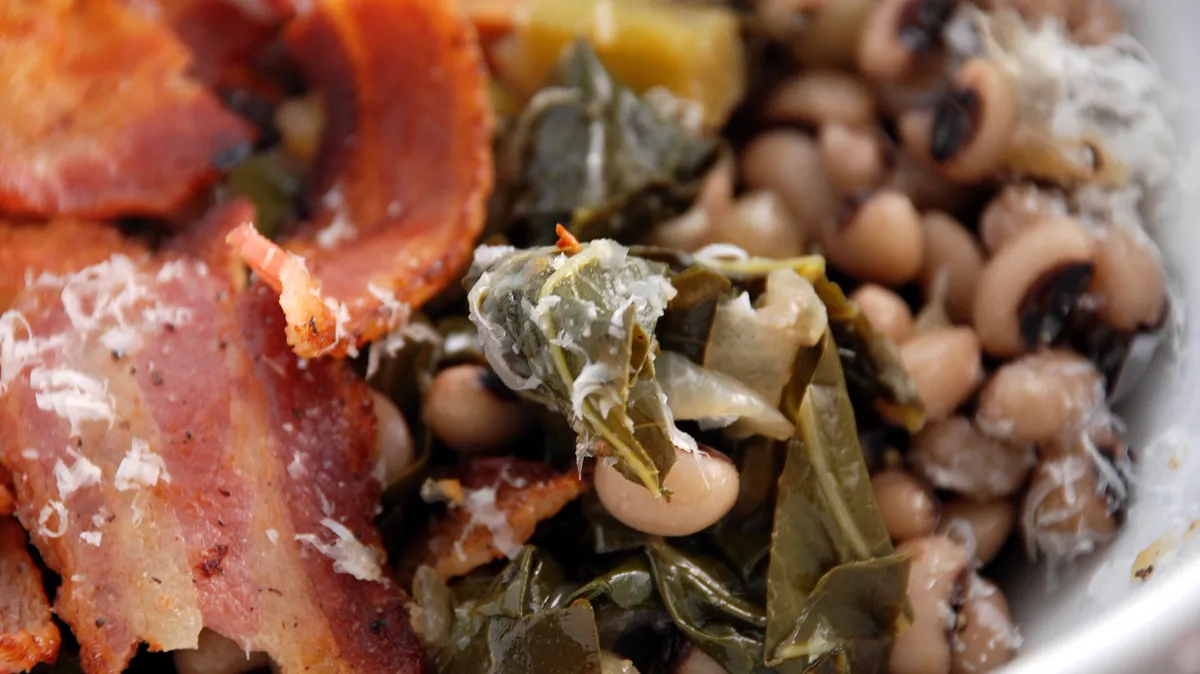
Why do people eat black-eyed peas on New Year’s Day?
People eat black-eyed peas on New Year’s Day because the peas are said to stand for coins and a prosperous year. The custom is strongest in the US South, served as Hoppin’ John with greens and cornbread. The pea came from West Africa, and the luck belief is documented by the 1930s, though its exact start is debated.
Black eyed peas new years customs grew up around a dish with deep roots. Smithsonian Magazine wrote in 2010 that Hoppin’ John came from enslaved West Africans and that its name is still a mystery. The Wikipedia entry on the dish traces it to the Gullah people of the Carolina Lowcountry and to dishes such as Ghana’s waakye. The rhyme “peas for pennies, greens for dollars, and cornbread for gold” is quoted in the Wikipedia entry on New Year’s food.
Three origin stories compete for the luck part:
- The Civil War story: Union troops supposedly left peas and salt pork behind as animal feed, so Southerners survived on them. The Wikipedia entry on black-eyed peas notes that General Sherman’s army brought its own supplies.
- The freedom story: the peas became a symbol of emancipation for African Americans, because the Emancipation Proclamation took effect on 1 January 1863, according to the National Archives and the same Wikipedia entry.
- The Jewish link: some Southern traditions point to Jewish families eating the peas, a connection the same entry mentions only briefly.
The regional split is real, too. On a Reddit cooking thread from December 2023, one home cook who grew up in Ohio described pork and sauerkraut every New Year’s Day for luck, then found almost nobody doing it on the West Coast, while Southern replies listed greens, peas and cornbread. One reply knew the greens meant money but had no idea why the peas meant luck. Would you know how to explain yours?
Why are pork, lentils and herring lucky foods in Europe?
Pork, lentils and herring are lucky foods for new year in Europe because each one is linked to plenty or money: pigs root forward, lentils look like small coins, and herring has silver skin. There is also a practical reason: pigs were slaughtered near midwinter.
Smithsonian Magazine’s 2010 feature quoted nutritional anthropologist Janet Chrzan of the University of Pennsylvania: “pigs were slaughtered around the time of the winter solstice.” The same piece quoted food historian Betty Fussell, who said a family with a pig to slaughter “felt prosperous”, and named roast suckling pig as the centerpiece in Spain, Portugal, Cuba and Hungary. Its author, Annette Foglino, remembered her Italian grandfather’s New Year’s Day cotechino, cut into sections and spread with mustard.
That Italian pairing has its own myth. Cotechino and zampone are often dated to the siege of Mirandola in 1511, a story repeated in Italy Segreta, but food historian Alberto Grandi told the same magazine the origins are “much more recent”, calling zampone largely an industrial product of the 1950s or 1960s. The lentils on the side are said to resemble the coins of ancient Rome, per the Wikipedia entry on New Year’s food.
Further north, the luck shifts to the sea. Smithsonian Magazine reported that people in Germany, Poland and parts of Scandinavia eat pickled herring at midnight for a bountiful catch, and in Poland the silver color stands for money. In Austria and Germany, marzipan pigs are handed out as luck charms, and the German Wikipedia entry on the luck pig calls the origin of the saying “Schwein haben”, to be lucky, uncertain. Is luck a meaning, or just a reason to share what is already on the shelf?
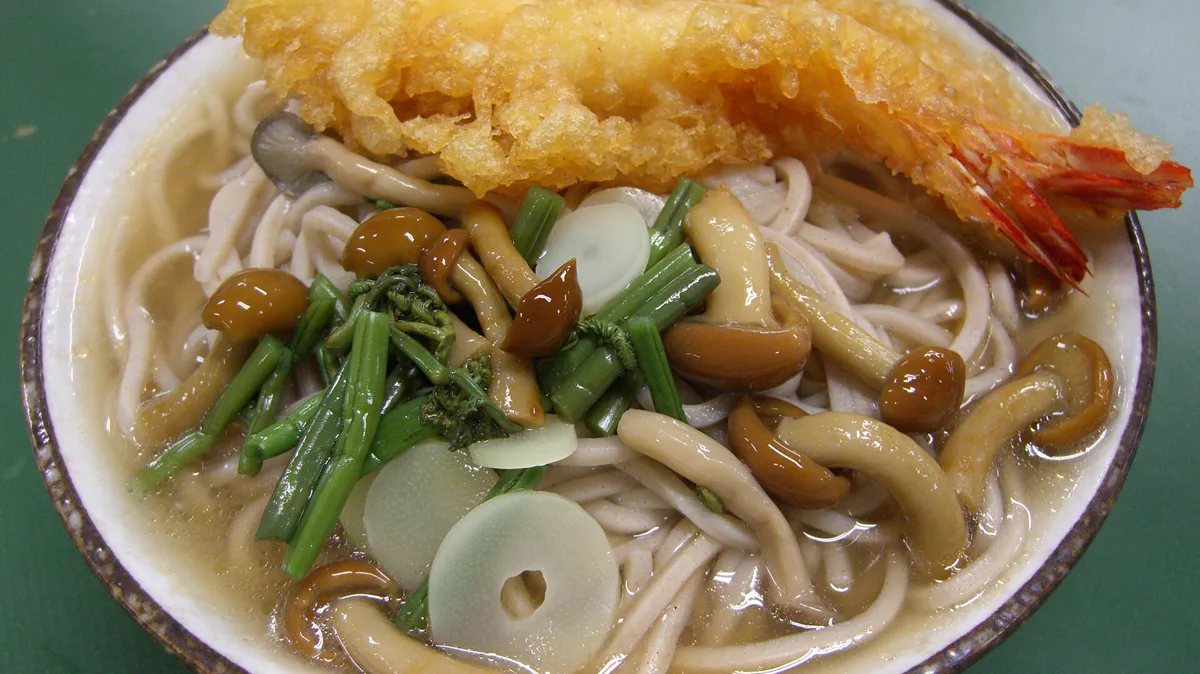
Are these foods eaten at midnight or on New Year’s Day?
It depends on the food. Grapes, herring and the Philippine round fruits belong to the stroke of midnight, Japanese soba and Dutch oliebollen to the evening of 31 December, and Hoppin’ John, pork and sauerkraut to the meal on 1 January. The Greek coin cake and pomegranate can be either, depending on the family.
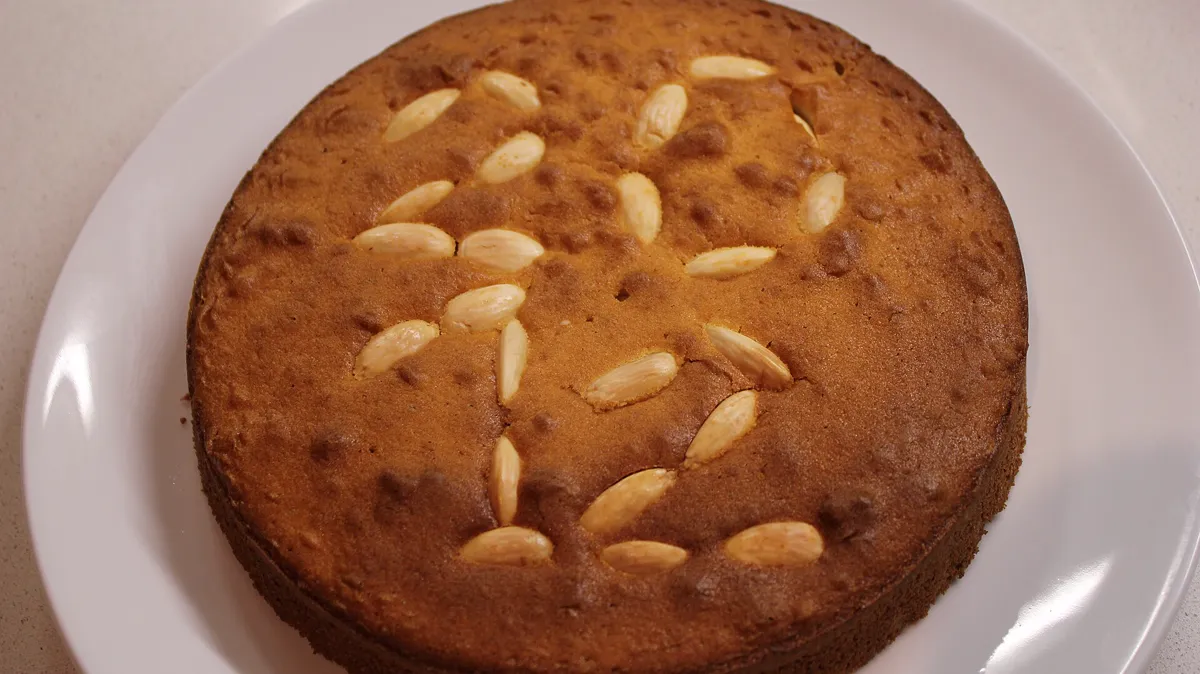
Toshikoshi soba is eaten on omisoka, the last day of the year, and one of its names, jumyō soba, means “lifespan soba”, according to the Wikipedia entry on the dish. Japan only moved its New Year to 1 January with the Gregorian calendar in 1873, per the Wikipedia entry on the Japanese calendar.
Greek families may cut the vasilopita at midnight, the Wikipedia entry on vasilopita says. The pomegranate is often a morning custom: back from church on New Year’s Day, the head of the house smashes the fruit at the front door, and more scattered seeds mean more good fortune, as XpatAthens described it in 2024. In Türkiye, people break a pomegranate at the threshold and eat the seeds, Daily Sabah reported in 2022.
Foods to eat on new year’s day itself, in the strict sense, are mostly American: Hoppin’ John, greens, cornbread, pork and sauerkraut. Which do you keep: the midnight bite or the slow lunch the next day?
Why are so many lucky New Year foods round or coin-shaped?
Many lucky New Year foods are round, flat or coin-like because people link their shape or color to money: peas, lentils, round fruits and the coin hidden in a cake. Others stand for long life or forward motion. This is a pattern we see across the table, an interpretation, and no source proves that shape came first.
Count the meanings in the table and money wins: six of the twelve foods are explained through coins, cash or silver, by our count:
- Coins: black-eyed peas, lentils, the coin in the vasilopita, twelve round fruits.
- Paper money or gold: collard greens and cornbread.
- Silver: pickled herring.
- Long life: soba noodles.
- Forward motion or plenty: pork, pomegranate seeds.
- Time itself: the twelve grapes, one per month.
Food historian Andrew F. Smith put the doubt plainly in Smithsonian Magazine in 2010: it is hard to know which came first, the belief that a food is lucky, or the habit of eating what was available and attaching a meaning to it later. Peas, lentils and cabbage keep through winter, and pigs were slaughtered in midwinter, so the coin meaning may be a story told after the fact about food people were eating anyway. If your lucky food had to be explained from scratch, what would its story be?
Seasonal food customs often work this way. Our look at harvest festivals in other cultures follows the same question through autumn, and the customs people keep around the world show how a habit changes as it travels.
Myth or fact? Four New Year’s Day food traditions checked
Popular origin stories for New Year’s Day food traditions tend to be tidy, dramatic and hard to source. These four fail or wobble when you look for the oldest dated record.
- “A grape surplus in 1909 invented the 12 grapes.” Mostly myth. Madrid papers describe the custom from 1894, as quoted in the Spanish Wikipedia entry; the 1909 harvest helped spread it.
- “Black-eyed peas are lucky because Sherman’s troops left them behind.” Unproven. The Wikipedia entry on black-eyed peas notes the army carried its own supplies, which undercuts the story.
- “Zampone was invented during the 1511 siege of Mirandola.” Disputed. Alberto Grandi told Italy Segreta it is largely a product of the 1950s or 1960s.
- “Saint Basil hid coins in loaves, so Greeks bake vasilopita.” Legend. Margaret Hasluck wrote in 1927 that no early document mentions the cake and linked it to older king-of-the-bean customs, per the Wikipedia entry on vasilopita.
None of this makes the food taste worse; it just moves the start date closer. For more customs younger than they look, browse the folklore and origins section.
Tradition trivia
What is Skippin’ Jenny?
Hoppin’ John leftovers eaten on 2 January, a show of thrift that stretches the luck, according to the Wikipedia entry on the dish.
When did Spanish television start showing the grapes at the Puerta del Sol?
Televisión Española first broadcast the Puerta del Sol clock in 1962; before that, people listened on the radio, the Spanish Wikipedia entry says.
Do Dutch families eat oliebollen on New Year’s Day?
Mostly the evening before. Oliebollen are a New Year’s Eve treat, also sold at winter fairs and street stalls, according to the Wikipedia entry on oliebollen.
Who gets the first slices of a vasilopita?
Families often set aside the first slices for symbolic guests, such as saints, the house or the poor, then serve everyone from oldest to youngest, the Wikipedia entry on vasilopita says.
Origins in this post were checked against encyclopedias, museum and library sources. An AI tool drafted the first pass, and anything the sources treat as uncertain is flagged as uncertain in the text.
Sources: Wikipedia entries on the twelve grapes, the lucky grapes (Spanish), the rice and pea dish, the cowpea legume, year-end soba, the coin cake, fried dough balls, New Year foods, the last night of the year and the Japanese calendar; Smithsonian Magazine, lucky foods feature; The Food Timeline, New Year food history; National Archives, the 1863 proclamation; The Diplomat in Spain, grape history; Italy Segreta, stuffed trotter story; XpatAthens, pomegranate custom; Daily Sabah, customs in Türkiye.