
Autumn & Thanksgiving
Thanksgiving Traditions: Myths, Facts and Their Origins
Where it comes from: Most Thanksgiving traditions are younger than the 1621 harvest feast at Plymouth. The national holiday grew from Sarah Josepha Hale’s magazine campaign and Lincoln’s 1863 proclamation, the fourth Thursday date became law in December 1941, and customs like parades, football and the turkey pardon were added one by one.
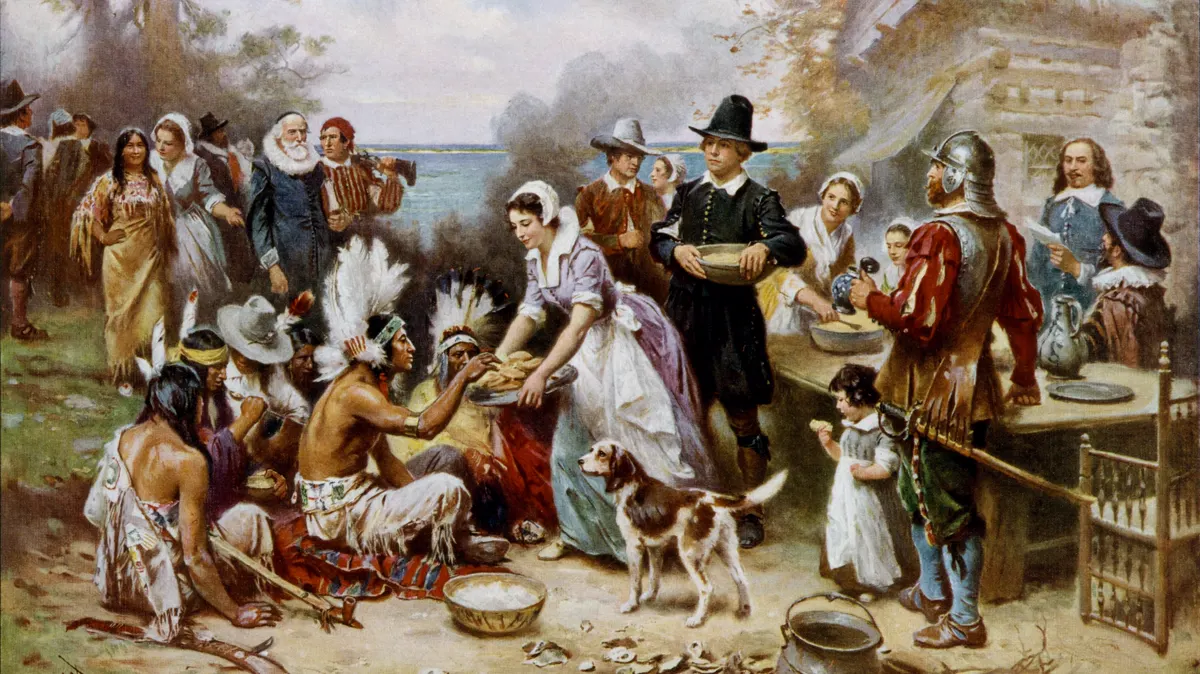
Start with a small shock: the people at the famous 1621 harvest meal never called it Thanksgiving. Neither eyewitness account uses the word “thanks”, according to a 2021 Smithsonian Magazine feature on the 400th anniversary. The label “first Thanksgiving” arrived about two centuries later, in a footnote. So where did the Thanksgiving traditions people keep today really come from?
The answer is a relay race, and every date below names its archive, museum or reference source.
- Autumn 1621: about 50 English colonists and Massasoit (Ousamequin) with some 90 men share a three-day harvest celebration at Plymouth, per the eyewitness letter transcribed by Plimoth Patuxet Museums.
- 28 September 1789: the first Federal Congress asks the President to recommend a day of thanksgiving, and George Washington names Thursday, 26 November 1789, according to the National Archives.
- 28 September 1863: Hale writes to President Lincoln asking for a proclamation naming the last Thursday in November, in a letter held by the Library of Congress.
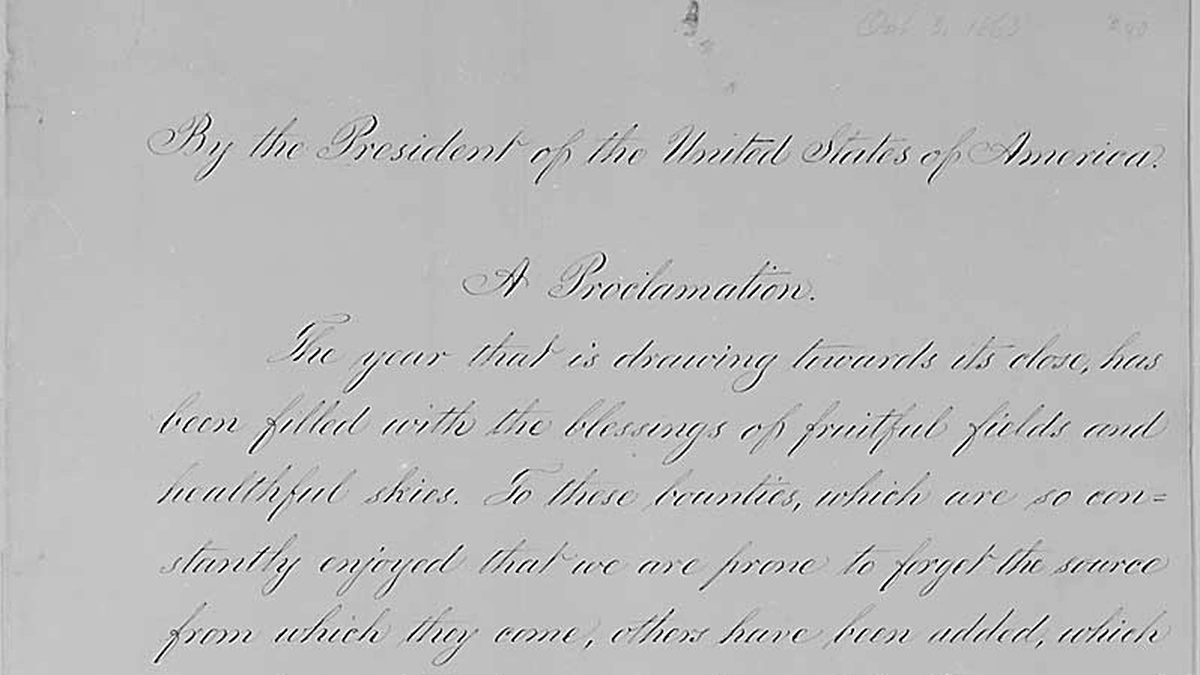
- 3 October 1863: Lincoln proclaims a national Thanksgiving for 26 November, the last Thursday of the month, according to the National Archives.
- 1939: Franklin D. Roosevelt moves the holiday one week earlier, to the second-to-last Thursday, according to the National Archives.
- 26 December 1941: Roosevelt signs the joint resolution that fixes Thanksgiving on the fourth Thursday of November, according to the National Archives.
- 1956: Texas, the last holdout, observes the last Thursday for the final time, per the Wikipedia entry on the Franksgiving controversy.
Was 1621 really the first Thanksgiving?
Not in the way the name suggests. The 1621 gathering at Plymouth was a harvest celebration that lasted three days, and the colonists did not call it a thanksgiving. The New England tribes already kept their own autumn harvest feasts of thanksgiving, according to the Smithsonian’s National Museum of the American Indian, while English colonists in Virginia had held thanksgiving days since 1607, per the Wikipedia history of the holiday.
The whole record of 1621 is one paragraph. Winslow wrote that after the harvest the governor sent four men out fowling, and that “many of the Indians” came, “their greatest king Massasoit, with some ninety men, whom for three days we entertained and feasted”. The Wampanoag guests went out and killed five deer, which they gave to the governor and other leaders, in the letter transcribed by Plimoth Patuxet Museums.
Virginia has the older claim: on 4 December 1619, 38 English settlers at Berkeley Hundred held a thanksgiving their charter required them to repeat every year, the same history notes.
What did the guests think they were attending? Plimoth Patuxet reads it as diplomacy after the spring 1621 alliance, and Wampanoag and Penobscot historian Nancy Eldridge called Ousamequin’s arrival probably “a political show of force”, the museum notes. Mashpee Wampanoag cultural coordinator Darius Coombs made the same point to Smithsonian Magazine: back then, he said, nobody called it Thanksgiving at all.
And the food? The eyewitness letter names only venison and wildfowl, according to Plimoth Patuxet Museums, and Governor William Bradford mentioned a “great store of wild turkeys” that autumn.
Who made Thanksgiving a national holiday?
Abraham Lincoln signed the proclamation in 1863, but the push came from Sarah Josepha Hale, editor of Godey’s Lady’s Book. She lobbied presidents and governors for years, and on 28 September 1863 she asked Lincoln for a fixed “Union Festival” on the last Thursday of November, in a letter held by the Library of Congress.
Before Hale, each state set its own day, some as early as October and others as late as January, and the holiday was largely unknown in the South, according to the Wikipedia biography of Hale. Washington had proclaimed a national thanksgiving in 1789, the National Archives notes, but later presidents chose dates and even months as they pleased.
Hale is better known as the author of “Mary Had a Little Lamb”, and she wrote to five presidents, from Zachary Taylor to Lincoln, per the same biography. Most retellings say her campaign lasted 17 years, counting from 1846. Her own letter to Lincoln says “for the last fifteen years” she had set out the idea in her magazine.
Lincoln acted within a week. His proclamation of 3 October 1863 opens with a year “filled with the blessings of fruitful fields and healthful skies” in the middle of the Civil War. So the national date is a war-time creation. Does that change how it feels to you?
Why is Thanksgiving on the fourth Thursday of November?
Because Congress chose the fourth Thursday in December 1941 to end two years of confusion. Lincoln’s tradition used the last Thursday, but in some years November has five. The House first voted for the last Thursday on 6 October 1941, and the Senate changed it to the fourth on 9 December, according to the National Archives.
The trouble started in 1939, when the last Thursday fell on 30 November. Department store executive Fred Lazarus Jr. urged Roosevelt to move the holiday earlier to lengthen the year-end shopping season, per the Wikipedia entry on the Franksgiving controversy, and Roosevelt named 23 November instead.
The country split. The National Archives reports that 32 states followed Roosevelt’s date and 16 kept the last Thursday. The Wikipedia record gives a messier 1939 count (23 states and the District of Columbia on the new date, 22 on the old, three taking both) and puts the 32 and 16 split in 1940 and 1941.
A 1941 Commerce Department survey found no significant rise in retail sales, according to the Wikipedia account. Roosevelt signed the joint resolution on 26 December 1941, the National Archives notes, and it applied from 1942. Since then Thanksgiving can fall no earlier than 22 November and no later than 28 November, per the Wikipedia history of the holiday.
Where do family Thanksgiving traditions come from?
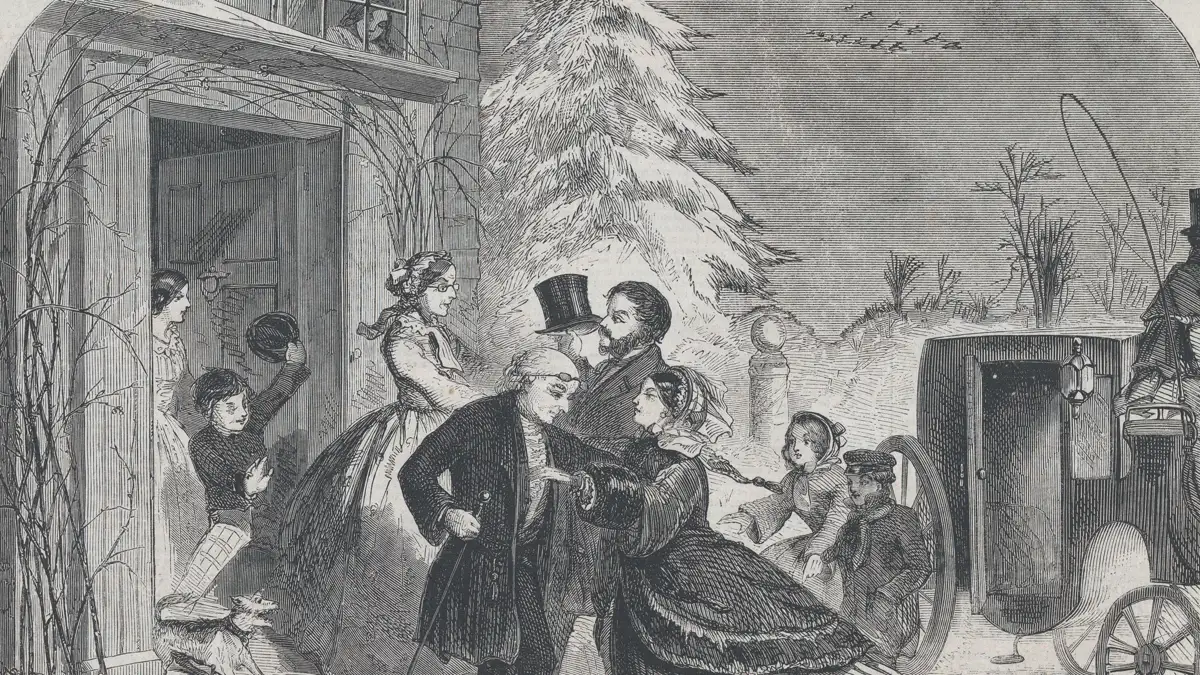
Most family Thanksgiving traditions date from the 1800s or later, not from 1621. Going home to relatives was already the heart of the New England holiday in the early 1800s, football joined in 1869, parades in the 1920s, and newer customs like turkey trots and Friendsgiving keep arriving, according to the reference entries listed in the table below.
Lydia Maria Child’s 1844 poem, now sung as “Over the River and Through the Wood”, originally went to “grandfather’s house”, not grandmother’s, per its Wikipedia entry. In New York City, costumed children once went begging on Thanksgiving in the Ragamuffin parades, per the Wikipedia history of the holiday, a custom that turns up again in our history of trick-or-treating on the autumn calendar.
| Custom | Since when | What the record shows | Source |
|---|---|---|---|
| Going home for the holiday | Early 1800s | New England days of thanksgiving centered on a return to the family home, church and a large meal | Wikipedia, Thanksgiving (United States) |
| “Over the River” song | 1844 | Lydia Maria Child’s poem printed in Flowers for Children | Wikipedia, poem entry |
| Football on the day | 1869 | A Philadelphia match between two cricket clubs, then Princeton against Yale from 1876 to 1881 | Wikipedia, American football on Thanksgiving |
| Turkey trot races | 1896 | The Buffalo race is the oldest continually run public footrace in the United States | Wikipedia, Turkey trot |
| Thanksgiving Day parades | 1920 and 1924 | Philadelphia’s parade launched in 1920; the New York department store parade followed in 1924 | Wikipedia, Thanksgiving (United States) |
| A turkey for the president | 1873, formal from 1947 | Farmer Horace Vose sent birds from 1873; the poultry industry ceremony began under Truman | Wikipedia; White House Historical Association |
| National Day of Mourning | 1970 | An annual gathering at Cole’s Hill in Plymouth led by the United American Indians of New England | Wikipedia; Smithsonian NMAI blog |
| Friendsgiving | 2007 | First known use of the word, added to the Merriam-Webster dictionary in 2020 | Wikipedia, Friendsgiving |
| Saying what you are thankful for | No documented start | Common at today’s tables, but no reference source gives a first date | None found |
Families also build customs of their own, and some of the best recorded ones come from Native households. In a museum blog essay, Dennis Zotigh of the National Museum of the American Indian wrote that he does not celebrate the holiday, yet gathers with family and friends for a big meal without thinking about 1621. One family he heard from in El Reno, Oklahoma rents a conference room, where elders talk about family history before everyone shares thanks.
Historian Linda Coombs (Aquinnah Wampanoag) described her own day to Smithsonian Magazine in an anniversary feature: she usually attends the Day of Mourning ceremonies in Plymouth, and whether she cooks a turkey is a practical choice, since she lives alone. She asks people to remember how they came to be able to gather. Which of your own customs could you date, if someone asked?
For more autumn customs and where they started, browse our autumn and Thanksgiving origins section.
Did Lincoln start the presidential turkey pardon?
Probably not. The tale of Lincoln sparing his son Tad’s turkey in 1863 only appeared in print after the president’s death in 1865, and the bird was meant for a December dinner, not Thanksgiving, per the Wikipedia history of the presentation. The ceremony itself began in 1947, and George H. W. Bush was the first to use the words “presidential pardon”, in 1989, according to the White House Historical Association.
The steps in between are well documented. Rhode Island farmer Horace Vose sent the White House a turkey every year from 1873 until his death in 1913, per Wikipedia. In 1947 the National Turkey Federation presented a bird to Harry Truman, and those early birds were meant for dinner, some wearing a sign that read “Good Eatin’ Mr. President”, according to the White House Historical Association.
John F. Kennedy sent his turkey back to the farm on 19 November 1963, saying he would let this one grow, per Wikipedia, and newspapers called it a pardon. Ronald Reagan joked about “pardoning” a turkey named Charlie in 1987. Bush made it formal in 1989, and every president since has held the ceremony each year, as of October 2026. So the documented pardon is younger than many people watching it. Surprised?
Thanksgiving traditions around the world
Several countries keep a day with a similar name, but most have their own history. Dates and origins below come from the Wikipedia entry on Thanksgiving and its sources:
- Canada: the second Monday in October; the first official national Thanksgiving was held on 15 April 1872, and Parliament set the modern wording in 1957.
- Liberia: the first Thursday of November, a national holiday by statute since 1883, linked to the colony founded in 1821 by free Black Americans and formerly enslaved people from the United States.
- Norfolk Island: the last Wednesday of November, a custom brought by visiting American whaling ships.
- Japan: Labor Thanksgiving Day on 23 November, a postwar holiday rooted in the Shinto harvest rite Niiname-sai.
- Germany: Erntedankfest, a church harvest thanksgiving often held on the first Sunday of October.
- Grenada: Thanksgiving Day on 25 October marks events of 1983 and is unrelated to the North American holidays.
Thanksgiving myths and facts, checked
Thanksgiving facts travel fast, and some arrive bent. Labels below are strict: documented means a dated record exists, partly true means the core is right but the details are not, and myth means the record contradicts it.
| Claim | What the sources say | Source | Verdict |
|---|---|---|---|
| The 1621 meal was called Thanksgiving | Neither Winslow nor Bradford uses “thanks” or “Thanksgiving”; the label dates from an 1841 footnote | Smithsonian Magazine; Plimoth Patuxet Museums | Myth |
| Plymouth held the first thanksgiving in America | Virginia colonists held thanksgivings from 1607 and at Berkeley Hundred in 1619 | Wikipedia, Thanksgiving (United States) | Myth |
| Pilgrims and Wampanoag repeated the feast every year | Linda Coombs calls it “a onetime event”; the 1621 meal was largely forgotten for hundreds of years | Smithsonian Magazine; Wikipedia, Thanksgiving | Myth |
| Turkey was the main dish in 1621 | Only venison and wildfowl are named; Bradford mentions plenty of wild turkeys that autumn | Plimoth Patuxet Museums | Partly true |
| Lincoln created the holiday on his own | He acted on Sarah Josepha Hale’s letter of 28 September 1863, after decades of her campaigning | Library of Congress; Wikipedia, Hale | Partly true |
| Roosevelt set the fourth Thursday in 1939 | His 1939 date was the second-to-last Thursday; Congress fixed the fourth Thursday in 1941 | National Archives | Partly true |
| Lincoln started the turkey pardon | The Tad story was printed after 1865; the formal pardon dates from 1989 | Wikipedia; White House Historical Association | Disputed |
| The date has been fixed by law since 1941 | Signed 26 December 1941 and applied from 1942 | National Archives | Documented |
One perspective belongs in any honest fact check. For many Wampanoag and other Native people, the holiday recalls what followed 1621: diseases had killed up to 90% of New England’s Native population between 1616 and 1619, Smithsonian Magazine reports, and colonization came after. Want to test a claim? Find the oldest dated record and ask who wrote it.
Tradition trivia
When is Thanksgiving in 2026?
Thursday, 26 November 2026, the fourth Thursday of the month. In 2027 it falls on 25 November, according to the dates listed in the Wikipedia entry on Thanksgiving.
What is the National Day of Mourning?
An annual gathering held on Thanksgiving Day at Cole’s Hill in Plymouth, Massachusetts, since 1970. It is led by the United American Indians of New England and remembers Native ancestors and the history that followed colonization.
Did the Pilgrims call themselves Pilgrims?
No. The separatists called themselves “Saints”, and the word Pilgrims was not widely used for them until the 1870s, according to Smithsonian Magazine and the National Museum of the American Indian.
Who wrote “Over the River and Through the Wood”?
Lydia Maria Child, a writer and abolitionist, published it in 1844 as “The New-England Boy’s Song about Thanksgiving Day”. Her original line goes to grandfather’s house.
Why is Canadian Thanksgiving in October?
Winter comes earlier in the north, so the harvest ends earlier, which is the usual explanation given in the Wikipedia entry on Thanksgiving. Canada fixed the second Monday in October in 1957.
Origins in this post were checked against encyclopedias, museum and library sources. An AI tool drafted the first pass, and anything the sources treat as uncertain is flagged as uncertain in the text.
Sources: National Archives, congressional timeline; Library of Congress, manuscript letter; Plimoth Patuxet Museums, eyewitness account and harvest foods; Smithsonian, turkey pardon history; White House Historical Association, pardon question and presentation origins; Wikipedia entries on the national holiday, thanksgiving worldwide, the magazine editor, the 1939 date change and the turkey presentation.